


Home / Research
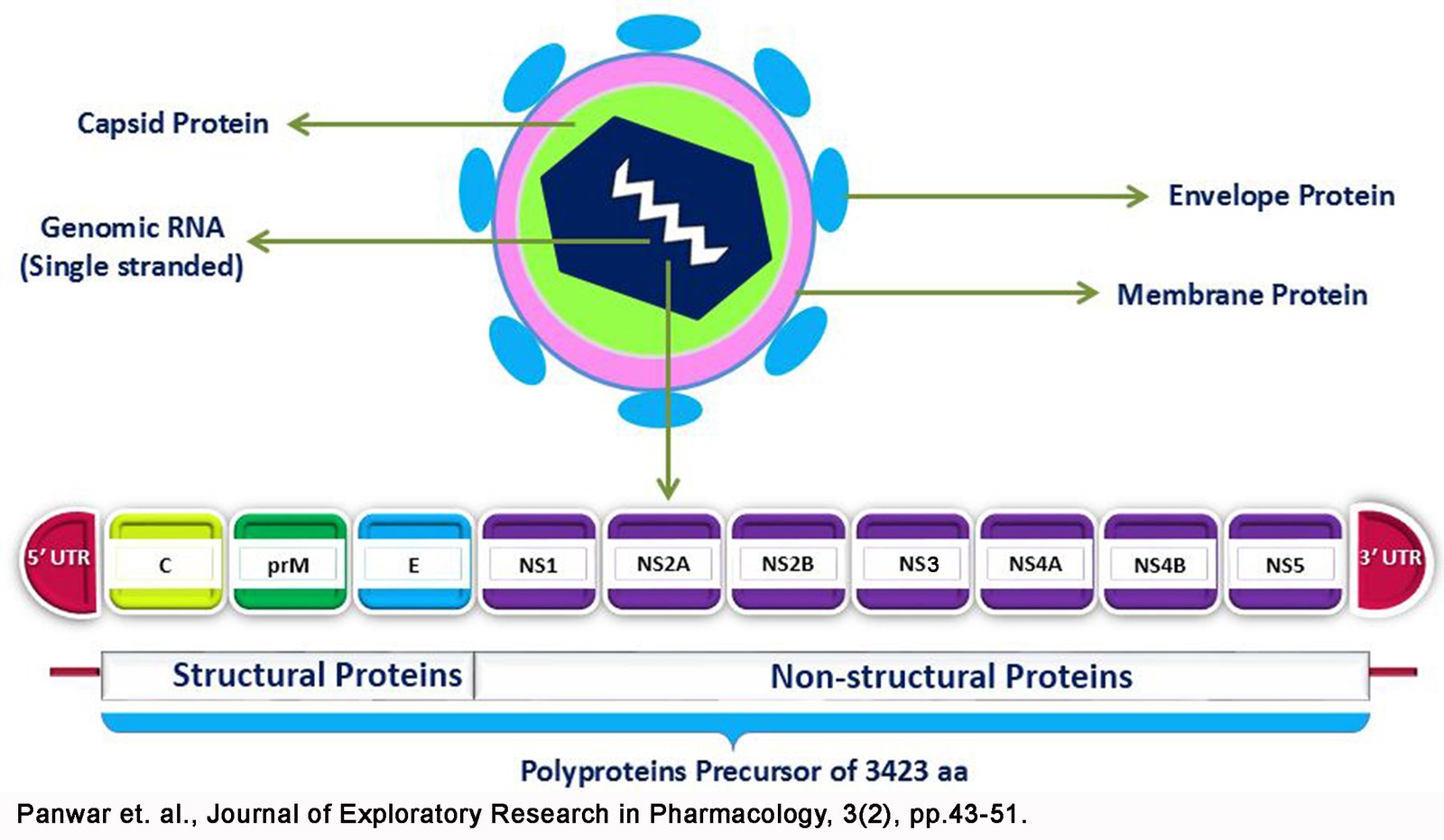
Zika virus (ZIKV) is a mosquito-borne flavivirus, transmitted mainly by Aedes aegypti and Aedes albopictus, that has emerged as a significant public-health threat linked to congenital microcephaly, other central nervous system malformations, and Guillain-Barré syndrome. Infection commonly presents with fever, rash, joint pain, and retro-orbital pain.
The single-stranded, positive-sense genome is translated as one polyprotein and cleaved into three structural and seven non-structural proteins. With no approved antiviral or vaccine, we target the NS2B-NS3 protease, which cleaves the polyprotein into functional units, and the NS3 helicase domain, including its NTPase site.
Virtual screening, molecular docking, pharmacophore mapping and molecular dynamics, combined with experimental validation, are used to identify and optimize small-molecule inhibitors of these targets on a shorter timeline and at lower cost than conventional drug discovery.
Department of Bioinformatics, Science Block, Alagappa University, Karaikudi-630 004,Tamil Nadu, India