


Home / Research
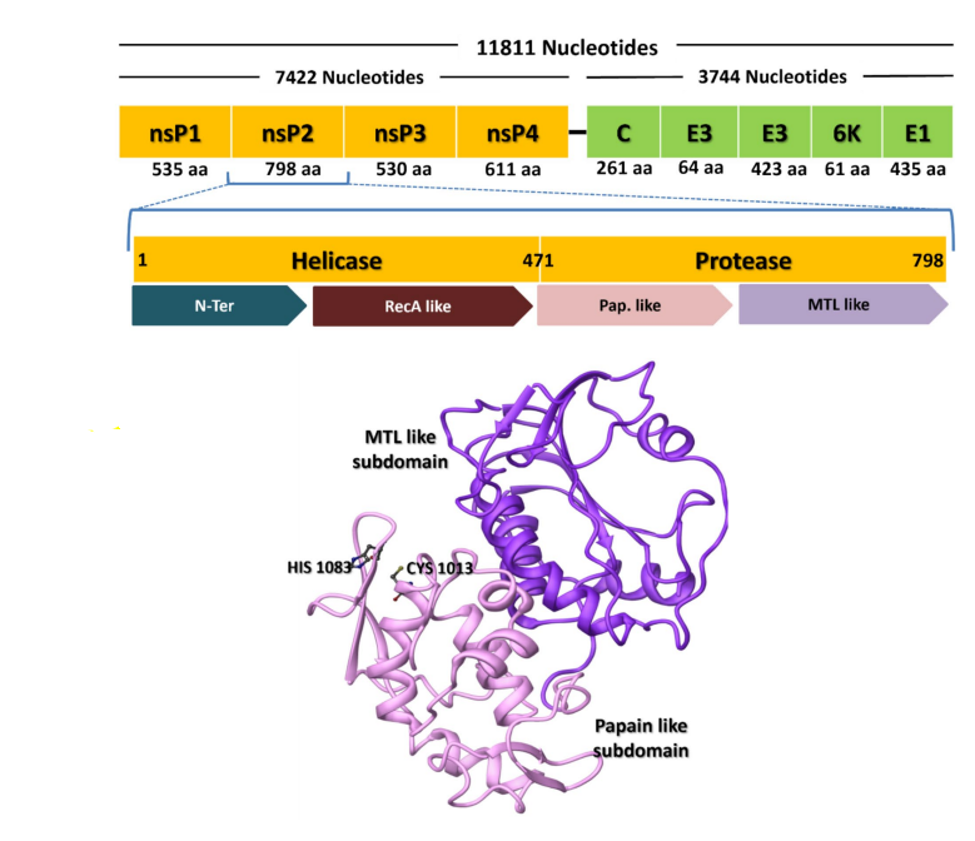
Chikungunya virus (CHIKV) is a mosquito-borne alphavirus transmitted by Aedes mosquitoes, causing outbreaks across Asia, Africa, the Americas and the Indian and Pacific Ocean regions, from fever, joint pain and rash to encephalitis and chronic arthritic complications. Its pathogenicity centres on non-structural protein 2 (nsP2), which combines an N-terminal RNA helicase with a C-terminal papain-like cysteine protease that cleaves the viral polyprotein and suppresses host antiviral defenses.
The enzymatic efficiency and structural stability of the nsP2 protease depend strongly on pH, which governs active-site accessibility, catalytic dyad (Cys-His) positioning and inhibitor binding — all critical to rational antiviral design.
Molecular dynamics simulations, principal component analysis, free-energy landscape mapping and molecular docking reveal how the nsP2 active site reorganizes with pH in both apo and inhibitor-bound states, the catalytic dyad showing differential flexibility and affinity for E-64 and Leupeptin. We use these insights to design pH-resilient CHIKV inhibitors.
Department of Bioinformatics, Science Block, Alagappa University, Karaikudi-630 004,Tamil Nadu, India