


Home / Research
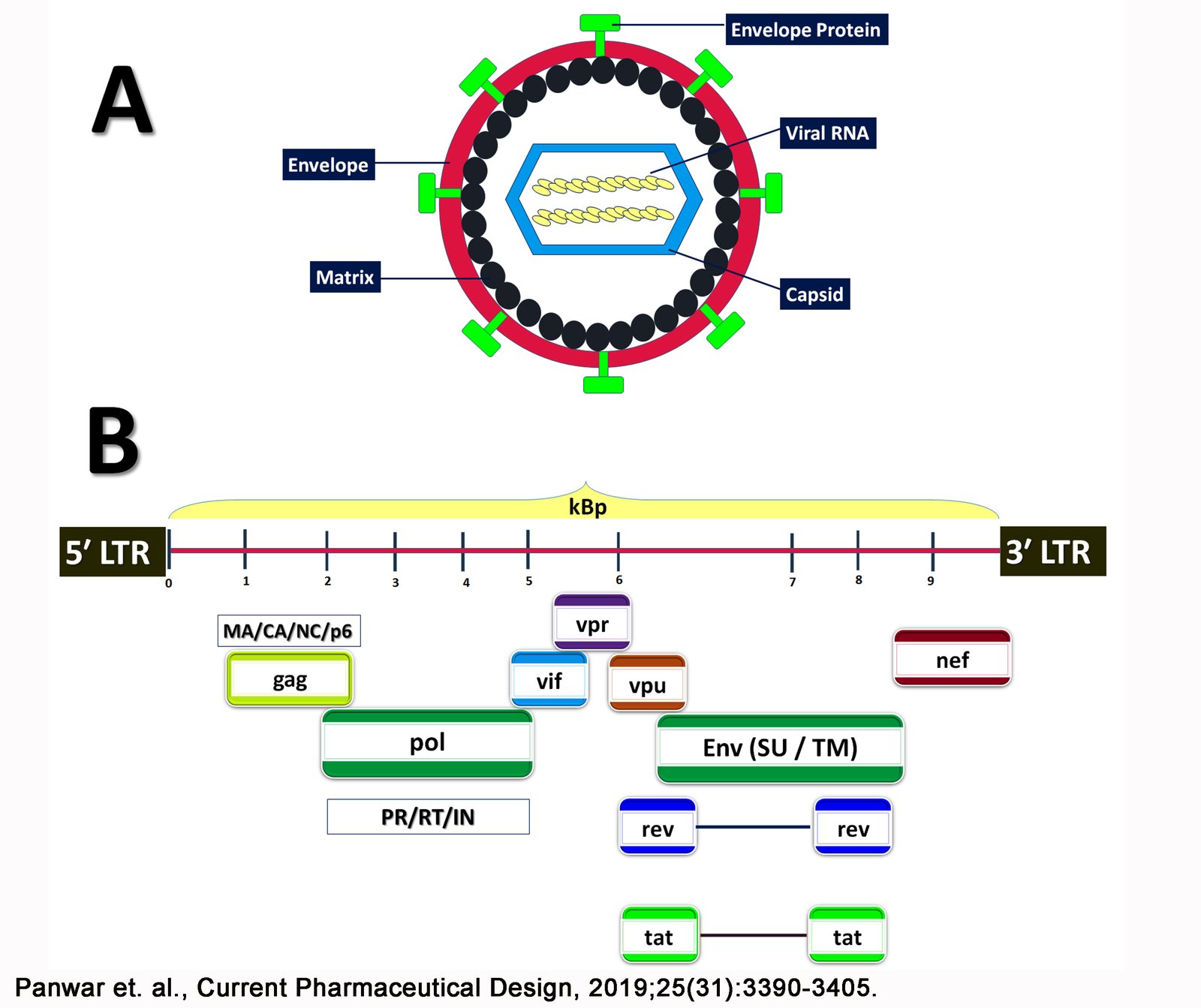
Human immunodeficiency virus type 1 (HIV-1), the causative agent of AIDS, remains a major global health burden. Entry begins when the envelope glycoprotein gp120 binds the CD4 receptor and a co-receptor (CCR5 or CXCR4) on CD4+ T cells, exposing the gp41 fusion peptide and driving membrane fusion.
Reverse transcriptase then converts viral RNA into double-stranded DNA, and integrase inserts it into the host genome with help from the cofactor LEDGF/p75. The resulting provirus yields Gag, Gag-Pol and Env polyproteins, matured by the viral protease. Approved antiretrovirals target each of these steps, yet resistance, toxicity and adherence challenges continue to limit long-term efficacy.
We target gp120/gp41, reverse transcriptase, integrase and protease using molecular docking, QM/MM-based ligand docking, pharmacophore modelling and molecular dynamics, with in vitro validation, to design dual- and single-target inhibitors that overcome resistance.
Department of Bioinformatics, Science Block, Alagappa University, Karaikudi-630 004,Tamil Nadu, India