


Home / Research
Human papillomavirus (HPV) is the primary causative agent of cervical cancer, one of the most significant cancers affecting women worldwide, and is also implicated in anogenital and head-and-neck malignancies. HPV is a small, non-enveloped DNA virus whose oncogenic potential in high-risk types (notably HPV-16 and HPV-18) is driven chiefly by the E6 and E7 oncoproteins.
E6 promotes proteasomal degradation of the tumour suppressor p53, disabling apoptosis and DNA-damage checkpoints, while E7 binds and inactivates the retinoblastoma protein (pRb) through its zinc-finger motif. Together they disrupt the p53/pRb axis, driving uncontrolled proliferation and malignant transformation of cervical epithelial cells.
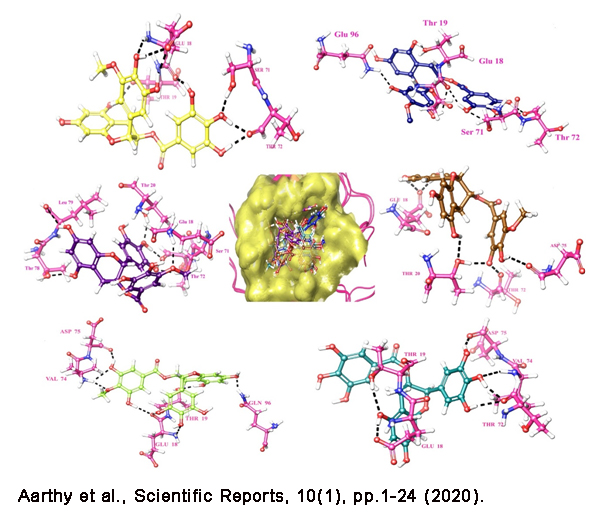
Using structure- and ligand-based computer-aided drug design, homology modelling of full-length E7 and molecular dynamics, we have identified lead compounds, including EGCG analogues, with potential to restore p53 and pRb function and inhibit HPV-driven transformation.
Department of Bioinformatics, Science Block, Alagappa University, Karaikudi-630 004,Tamil Nadu, India