


Home / Research
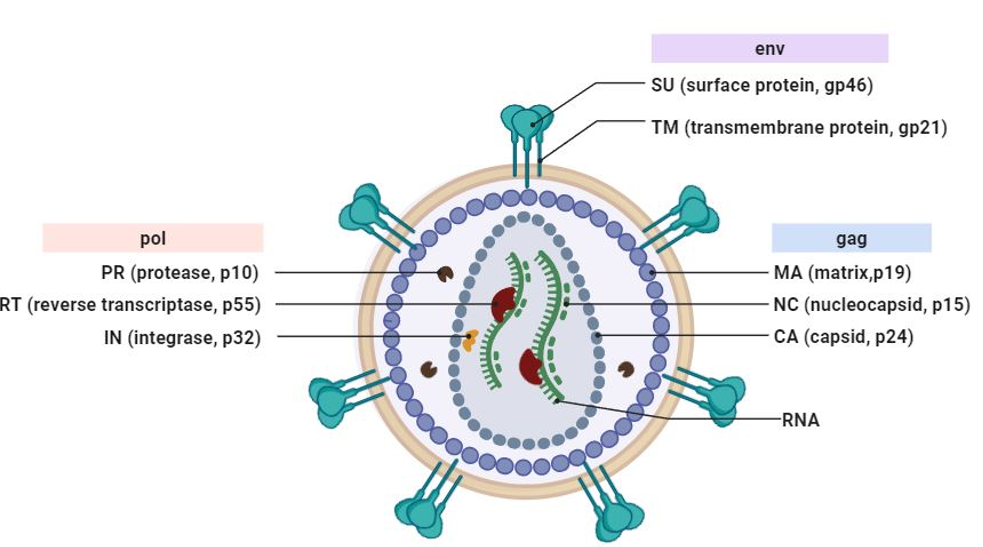
Human T-lymphotropic virus type 1 (HTLV-1), first identified in 1980, is a persistent deltaretrovirus transmitted through breastfeeding, contaminated blood products and sexual contact. It is endemic to southern Japan, the Caribbean, parts of Africa and South America, and areas of Iran, with an estimated 15–20 million people infected worldwide.
Most carriers remain lifelong asymptomatic, but a subset progress after long latency to adult T-cell leukemia/lymphoma (ATLL) or HTLV-1-associated myelopathy/tropical spastic paraparesis (HAM/TSP). Antiretrovirals effective against HIV have largely failed against HTLV-1-associated disease, underscoring the need for virus-specific strategies.
The ~8.5 kbp genome encodes Gag, Pro, Pol and Env alongside a pX region whose regulatory proteins drive persistence by hijacking host immune, transcriptional and cell-cycle pathways — a broad and largely underexploited landscape of drug targets.
Homology modelling, protein-protein and protein-ligand docking, and molecular dynamics simulations are used to characterize key HTLV-1 protein complexes and their host-protein interactions, uncovering structural vulnerabilities and identifying small molecules or interaction hotspots capable of disrupting them.
Department of Bioinformatics, Science Block, Alagappa University, Karaikudi-630 004,Tamil Nadu, India